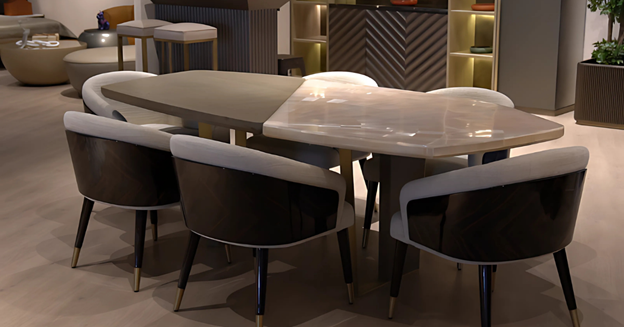
Furniture, at its core, is architecture made intimate. It holds the same language of line, mass, and proportion. But this comes to life when scaled to the human gesture, the quiet pause, or the way light falls across a surface in the evening. At Home ET TU, we see each piece not just as an object, but as a structure, one that carries purpose and poetry. This article explores the structural entity of furniture and how it elevates the space.
Form That Holds Meaning
The foundation of any well-crafted piece lies in its structure. Before the surface or style comes the bones, the geometry that lends strength, the weight that gives presence, the balance that invites ease. We approach this structure much like an architect would approach a building: with a focus on how it holds, how it breathes, and how it belongs. For instance, a wardrobe becomes more than storage; it becomes rhythm along a wall. A console, placed just right, becomes a threshold between spaces. When proportions are carefully considered, furniture does not interrupt the room; it anchors it.
Joinery as Language
Within the design of furniture lies the quiet art of connection. The way pieces are joined, whether through traditional dovetails or seamless, concealed fastenings, becomes a kind of punctuation. It is where the maker’s hand becomes visible, where strength meets refinement. These structural choices are not simply technical. They are expressive. A joint that’s left exposed might echo honesty and craft. When made with care, the architecture of a piece becomes part of its voice.
Balancing Solidity and Silence
There’s a discipline in knowing how much to express and how much to hold back. We believe that good design does not clamour for attention. It carries its beauty inward, allowing material, proportion, and detail to speak in soft harmony. This is where the idea of structural poetry lives. For example, in a cabinet whose lines draw the eye without shouting, there is a sense of restraint—an understanding that simplicity, when done well, is its form of richness.
When furniture is designed with architectural sensitivity, it shapes a feeling. The way a chair angles its back can invite rest. The height of a sideboard can frame a room. It is in these subtle decisions that the atmosphere is built, one quiet element at a time. At Home ET TU, we design to build within it, to construct forms that carry weight, lightness, and intention.